Optimaslisasi Pendekatan Psikologi dalam Mendukung Perkembangan Spiritual Anak di TK Kristen Pemulihan Barong Tongkok
DOI:
https://doi.org/10.47457/jps.v6i3.632Keywords:
anak, optimalisasi psikologi, spiritual, TK KristenAbstract
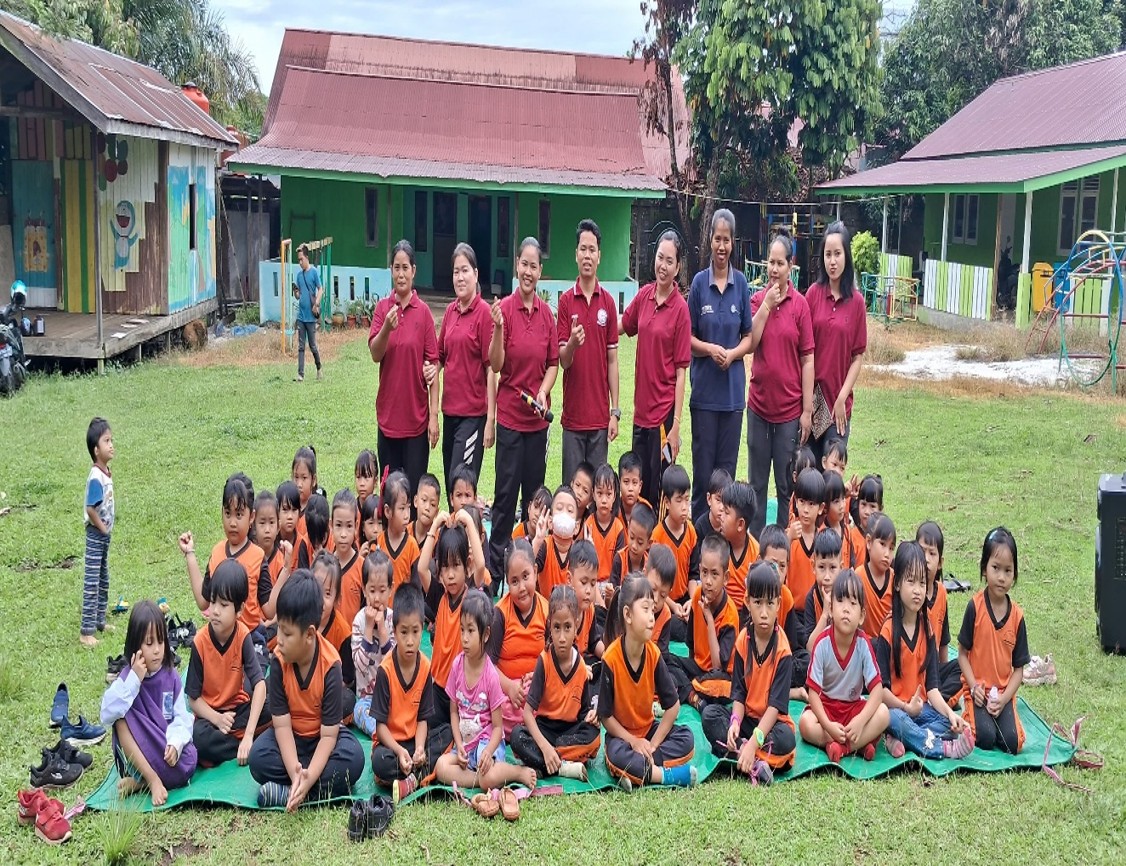
This community service was carried out at the Barong Tongkok Christian Kindergarten. This activity was motivated by the need to provide comprehensive support for children, particularly in spiritual and emotional aspects, through a psychological approach. Children at this school lack guidance that combines these two aspects, both from their family environment and at school, making it difficult for them to manage their emotions and develop spiritual awareness. In addition, learning approaches that integrate psychology and Christian values are still minimal, while teachers focus more on cognitive development. This programme aims to increase children's understanding of the basic principles of the Christian faith so that they can grow pedagogically and spiritually. Based on cognitive development theory, early childhood is in the preoperational phase, requiring concrete, direct, and interactive methods. Teaching faith through a psychological approach has been proven effective in improving understanding of Christian values. This programme is implemented in four stages: initial observation, implementation, follow-up, and evaluation. The novelty of this activity lies in the synergy between psychology and spirituality in the context of Christian schools, which is still limited. The results of this programme show an increase in children's spirituality, as seen in their ability to lead prayers, their enthusiasm for Bible stories, and their improved emotional management.
Downloads
References
Boillu, Frederik Melkias. 2023. “Mengasah Hati, Pikiran dan Iman: Integrasi Psikologi dan Pendidikan Agama Kristen dalam Perkembangan Anak.” Pendidikan Anak Usia Dini 2(1): 20–22.
Boynton, Heather M., and Christie Mellan. 2021. “Co-Creating Authentic Sacred Therapeutic Space: A Spiritually Sensitive Framework for Counselling Children.” Religions 12(7): 1–14.
Fadilah, Salwa. 2022. “Pentingnya Pendidikan Anak Usia Dini bagi Tumbuh Kembang Anak,.” Jurnal Dinamika Pendidikan Dasar 8(1): 50–58. https://osf.io/3j9qb/download.
Handayani, Sri. 2025. “Kompetensi Sosial Guru Pendidikan Agama Kristen dan Keterlibatan Orang Tua.” Jurnal Teologi dan Pendidikan Kristiani 3(3).
Harianja, Josefin, Aritonang Situmeang, and Diana Martiani Situmeang. 2024. “Penanaman Nilai Etika Kristiani terhadap Anak Peneladanan Karakter.” 2(3).
Josefin Harianja, Aritonang Situmeang, and Diana Martiani Situmeang. 2024. “Penanaman Nilai Etika Kristiani terhadap Anak Peneladanan Karakter.” Jurnal Teologi Injili dan Pendidikan Agama 2(3): 256–60.
Jumiarti, Desri et al. 2023. “Pendampingan Guru TK/PAUD dan SD dalam Pembinaan Karakter melalui Layanan Bimbingan dan Konseling.” Jurnal Pengabdian kepada Masyarakat Nusantara 4(4): 5089–95.
Kristian, Yunardi et al. 2022. “Gereja sebagai Pilar Pembentukan Iman Anak Usia Dini: Pendekatan Teologis dan Praktis.” Peran Guru Sekolah Minggu dalam Membentuk Karakter Anak Usia Dini di Era Teknologi 1(2): 50.
Lawolo, Agus Niada, and Julita Herawati P. 2023. “Peran Guru dalam Kegiatan Belajar Mengajar di TK/PAUD.” Pediaqu: Jurnal Pendidikan Sosial dan Humaniora 2(3): 11397–405.
Lukens, Ellen P., and William R. McFarlane. 2004. “Psychoeducation as Evidence-Based Practice: Considerations for Practice, Research, and Policy.” Brief Treatment and Crisis Intervention 4(3): 206–7.
Makupiola, Christy Agata, and Risky Aprianti Aziz. 2024. “Pengaruh Media Sosial bagi Perkembangan Karakter Anak Usia Dini.” Indo green journal 2(64–71): 81–86.
Manoppo, Febri Kurnia, Deflita R N Lumi, and Fieke Suwuh. 2023. “Peran Guru PAUD dalam Pemanfaatan Media Berwawasan Lingkungan untuk Menanamkan Nilai-nilai Pendidikan Kristiani pada Anak.” : 67–76.
Marselina Surat Doni, Klemens Kelin. 2025. “Membangun Integritas Berbasis Nilai-nilai Pendidikan Agama Kristen bagi Anak di TK Kristen ‘Baik.’” Imitatio Christo : Jurnal Teologi dan Pendidikan Agama Kristen 1(2): 130–44.
Munajat, Asep, Dadan Rahmat, and Ibnu Hurri. 2023. “Techno Parenting: Sinergi Sekolah, Lingkungan Sosial dan Orang tua untuk Meningkatkan Mindful dalam Pengasuhan Anak.” Jurnal PIPSI 8(3): 222–38.
Napitupulu, Maria Best et al. 2024. “Pengaruh Penggunaan Media Pembelajaran Video terhadap Minat Belajar Pendidikan Agama Kristen dan Budi Pekerti Siswa Kelas VIII SMP Negeri 4 Siborong-Borong Tahun Pembelajaran 2023/2024.” Jurnal Pendidikan Sosial dan Humaniora 3(3): 1–23.
Nurmala, Suni, and Susana. 2024. “Strategi Mengajarkan Alkitab bagi Anak Sekolah Minggu Usia 4-12 Tahun di GSKI Eleos Jakarta Timur.” Jurnal Pendidikan Tambusai 8 No. 1: 6436–45.
Padang, Priskayanti Kapu’ et al. 2024. “Pendekatan Holistik dalam Pendidikan Iman Kristen untuk Anak Usia Dini di Sekolah Minggu.” In Theos : Jurnal Pendidikan dan Theologi 4(11): 420–27.
Putri Utami Br Sembiring, Gita Noveri Eza. 2024. “Pengembangan Media Pembelajaran Interaktif Berbasis Problem Solving pada Tema Profesi untuk Anak Usia 5-6 Tahun.” Jurnal Usia Dini 10 no.1: 27–37.
Risti Saleha. 2014. “Peran Guru dalam Mengembangkan Kecerdasan Spiritual Anak Usia 4-5 Tahun.” Skripsi 12: 530–37.
Rukin. 2019. Metodologi Penelitian Kualitatif. Takalar: Yayasan Ahmar Cendekia Indonesia.
Sanjaya, Yudhy et al. 2025. “Real Kiddos : Jurnal Pendidikan Anak Usia Dini Manajemen Pengembangan Profesionalitas.” Pendidikan Anak Usia Dini 3(2): 83–93.
Situmorang, Y. 2023. “Model Pendampingan Anak Usia Dini ADHD di TK Sola Gratia Tikala Manad.” Montessori Jurnal Pendidikan Kristen Anak Usia Dini 4(2): 90–100.
Wahyuningsih, Hepi, Resnia Novitasari, and Fitri Ayu Kusumaningrum. 2021. “Kelekatan dan Kesejahteraan Psikologis Anak dan Remaja: Studi Meta-Analisis.” Psympathic : Jurnal Ilmiah Psikologi 7(2): 267–84.
Downloads
Published
Issue
Section
License
Copyright (c) 2025 Yasrin Mesalayuk, Aprianus Lendik Moimau

This work is licensed under a Creative Commons Attribution-ShareAlike 4.0 International License.
Authors who publish with this journal agree to the following terms:
- Authors retain copyright and grant the journal right of first publication with the work simultaneously licensed under a Creative Commons Attribution License that allows others to share the work with an acknowledgement of the work's authorship and initial publication in this journal.
- Authors are able to enter into separate, additional contractual arrangements for the non-exclusive distribution of the journal's published version of the work (e.g., post it to an institutional repository or publish it in a book), with an acknowledgement of its initial publication in this journal.
- Authors are permitted and encouraged to post their work online (e.g., in institutional repositories or on their website) prior to and during the submission process, as it can lead to productive exchanges, as well as earlier and greater citation of published work (See The Effect of Open Access).