Transformasi Pemahaman dan Perilaku Finansial Remaja
Evaluasi Program Literasi Keuangan di PKBM Raising Stars Institute Jakarta
DOI:
https://doi.org/10.47457/4bx17171Keywords:
literasi keuangan, remaja, modifikasi perilaku finansial, pendidikan karakterAbstract
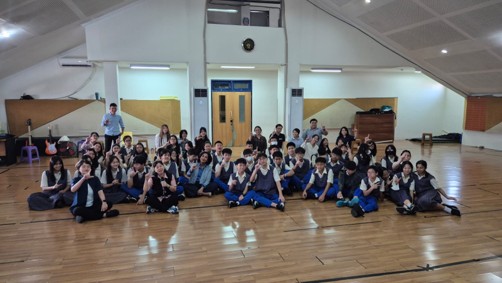
Penelitian ini mengkaji implementasi program literasi keuangan untuk remaja di PKBM Raising Stars Institute Jakarta sebagai respons terhadap rendahnya literasi finansial di kalangan pelajar Indonesia. Di era digitalisasi ekonomi, remaja menghadapi tantangan berupa tekanan konsumtif, kemudahan akses kredit, dan paparan media sosial yang mendorong perilaku belanja impulsif. Program literasi keuangan didesain untuk menumbuhkan pemahaman dasar pengelolaan uang, teknik budgeting, dan disiplin finansial. Menggunakan desain kuasi-eksperimental dengan pendekatan mixed-method, penelitian melibatkan 58 siswa SMP-SMA dan 15 guru pendamping melalui pre-test/post-test dan observasi partisipatif. Program disampaikan dalam format ceramah interaktif, diskusi kelompok, dan kuis berhadiah. Hasil menunjukkan peningkatan signifikan pemahaman konseptual dari 60% menjadi 85%, transformasi paradigma dari "menghabiskan lalu menabung" menjadi "menabung dulu baru menghabiskan", dan komitmen 70% peserta untuk menyisihkan minimal 10% uang jajan mereka. Faktor psikoemosional dan tekanan sebaya teridentifikasi sebagai tantangan utama implementasi. Program terbukti mampu meningkatkan pemahaman dan motivasi finansial, dengan rekomendasi pengintegrasian konsep literasi keuangan ke dalam kurikulum reguler dan pendekatan whole-school untuk memastikan keberlanjutan dampak jangka panjang.
Downloads
References
AFPI. 2024. “AFPI CEO Forum 2024: Industri Fintech Lending Siap Hadapi Tantangan Pasca Pemilu.” 2024.
Agustina, Andri. 2017. “PEMBELAJARAN KONSEP IKATAN KIMIA DENGAN ANIMASI TERINTEGRASI LCD PROJECTOR LAYAR SENTUH (LOW COST MULTI TOUCH WHITE BOARD.” JTK (Jurnal Tadris Kimiya) 1, no. 1. https://doi.org/10.15575/jta.v1i1.1163.
Ajzen, Icek. 2011. “The Theory of Planned Behaviour: Reactions and Reflections.” Psychology and Health. https://doi.org/10.1080/08870446.2011.613995.
Archuleta, Kristy L, Emily A Burr, Anita K Dale, Anthony Canale, Dan Danford, Erika Rasure, Jeff Nelson, et al. 2012. “What Is Financial Therapy? Discovering Mechanisms and Aspects of an Emerging Field.” Journal of Financial Therapy 3, no. 2. https://doi.org/10.4148/jft.v3i2.1807.
Bandura, Albert. 1986. “Social Foundations of Thought and Action : A Social Cognitive Theory / Albert Bandura.” New Jersey: Prentice-Hall, 1986 16, no. 1.
Beck, Aaron T., and David J.A. Dozois. 2011. “Cognitive Therapy: Current Status and Future Directions.” Annual Review of Medicine 62. https://doi.org/10.1146/annurev-med-052209-100032.
Denny Prakoso, Ramdan. 2025. “BI-RATE TETAP 5,75%: MEMPERTAHANKAN STABILITAS, MENDUKUNG PERTUMBUHAN EKONOMI.” 2025.
Fredricks, Jennifer A., and Wendy McColskey. 2012. “The Measurement of Student Engagement: A Comparative Analysis of Various Methods and Student Self-Report Instruments.” In Handbook of Research on Student Engagement. https://doi.org/10.1007/978-1-4614-2018-7_37.
Halik, Abdul, and Ahmad S. Rustan. 2021. “Sistem Pembelajaran Digital Berbasis Research: Studi Proyeksi Iain Parepare.” KoPeN: Konferensi Pendidikan Nasional 3, no. 2.
Harris, Lasana T., and Susan T. Fiske. 2009. “Social Neuroscience Evidence for Dehumanised Perception.” European Review of Social Psychology 20. https://doi.org/10.1080/10463280902954988.
Karuni, Ni Putu Putri, Ni Putu Eka Cahyani, and Gede Agung Artha Deva Jayadhi. 2023. “UPAYA PELESTARIAN BUDAYA ASLI INDONESIA MELALUI FENOMENA FOMO GENERASI Z DI MEDIA SOSIAL TIKTOKMENUJU INDONESIA EMAS.” UPAYA PELESTARIAN BUDAYA ASLI INDONESIA MELALUI FENOMENA FOMO GENERASI Z DI MEDIA SOSIAL TIKTOKMENUJU INDONESIA EMAS 3.
Keller, Tim. 2020. “Faith and Finance: A Theological Perspective on Economic Stewardship. Redeemer Publishing.” 2020.
Lee, Wonhyung. 2019. “Financial Capability and Asset Building in Vulnerable Households: Theory and PracticeMargaret Sherrard Sherraden, Julie Birkenmaier, and J. Michael Collins. (2018). Financial Capability and Asset Building in Vulnerable Households: Theory and Practice . Ne.” Journal of Teaching in Social Work 39, no. 2. https://doi.org/10.1080/08841233.2019.1583998.
Lourenço, Orlando, and Armando Machado. 1996. “In Defense of Piaget’s Theory: A Reply to 10 Common Criticisms.” Psychological Review 103, no. 1. https://doi.org/10.1037/0033-295X.103.1.143.
Maghfirah Nur Fadilah, Nathasya Indriwan, Nur Khoirunnisa, and Sri Mulyantini. 2022. “REVIEW FAKTOR PENENTU KEPUTUSAN INVESTASI PADA GENERASI Z & MILLENIAL.” MANAJEMEN 2, no. 1. https://doi.org/10.51903/manajemen.v2i1.112.
Margono, H. 2021. “The Real Secret Of Spiral Development Maturity.”
Mayer, Richard E. 2012. “Principles for Reducing Extraneous Processing in Multimedia Learning : Coherence, Signaling, Redundancy, Spatial Contiguity, and Temporal Contiguity Principles.” In The Cambridge Handbook of Multimedia Learning. https://doi.org/10.1017/cbo9780511816819.013.
OJK. 2024. “Survei Nasional Literasi Dan Inklusi Keuangan (SNLIK) 2024.” 2024.
Oktaviani, Elma, Asrinur, Antonio Wasono, Imam Prakoso, and Harrie Madiisriyatno. 2023. “TRANSFORMASI DIGITAL DAN STRATEGI MANAJEMEN.” Jurnal Oikos-Nomos 16.
Overton, Willis F., and Peter C. M. Molenaar. 2015. “Concepts, Theory, and Method in Developmental Science.” In Handbook of Child Psychology and Developmental Science. https://doi.org/10.1002/9781118963418.childpsy101.
Robinson, Priscilla. 2007. “Designing and Conducting Mixed Methods Research.” Australian and New Zealand Journal of Public Health 31, no. 4. https://doi.org/10.1111/j.1753-6405.2007.00096.x.
Rudeloff, Michelle. 2019. “The Influence of Informal Learning Opportunities on Adolescents’ Financial Literacy.” Empirical Research in Vocational Education and Training 11, no. 1. https://doi.org/10.1186/s40461-019-0086-y.
Santi, Fitriana, Hanjar Ikrima Nanda, and Ahmad Septian Hidayat. 2023. “LITERASI KEUANGAN: URGENSI DALAM PANDANGAN MAMA MUDA.” Sebatik 27, no. 1. https://doi.org/10.46984/sebatik.v27i1.2123.
Sujud, Fatih Atsaris, and Khasan Setiaji. 2020. “Determinan Tingkat Literasi Keuangan Siswa Sekolah Menengah (Studi Komparatif Indonesia Dan Vietnam).” Journal of Economic Education and Entrepreneurship Studies 1, no. 1. https://doi.org/10.26858/je3s.v1i1.13903.
Tan Tjin Yi, Petrina. 2023. “Faith-Based Investing, Stewardship, and Sustainability: A Comparative Analysis.” SSRN Electronic Journal. https://doi.org/10.2139/ssrn.4583542.
Wahyu Ramadhan. 2024. “Psikologi Keuangan Membangun Keterampilan Pengelolaan Keuangan Dan Kesejahteraan,” 1–12.
Wijanarko, Thomas Aquinas, Fransisca Tanti Anita, Lucia Jeni Setiowati, and Vivian Angelina Soegiharto Wibowo. 2022. “Pelatihan Pengenalan Instrumen Keuangan Dan Pengelolaan Keuangan Bagi Anak-Anak Di SMAK St. Agnes Surabaya.” Jurnal Abdi Masyarakat Indonesia 2, no. 5. https://doi.org/10.54082/jamsi.439.
Woetzel, Lola, Renny Thomas, Sonia Barquin, and Tiago Devesa. 2021. “Future of Asia: The Future of Financial Services.” 2021.
Wood, Wendy, and David T. Neal. 2016. “Healthy through Habit: Interventions for Initiating & Maintaining Health Behavior Change.” Behavioral Science & Policy 2, no. 1. https://doi.org/10.1177/237946151600200109.
Downloads
Published
Issue
Section
License
Copyright (c) 2026 Citra Ayu Susanto, Dion Markimmer Sihaloho, Dorce Hanggawali

This work is licensed under a Creative Commons Attribution-ShareAlike 4.0 International License.
Authors who publish with this journal agree to the following terms:
- Authors retain copyright and grant the journal right of first publication with the work simultaneously licensed under a Creative Commons Attribution License that allows others to share the work with an acknowledgement of the work's authorship and initial publication in this journal.
- Authors are able to enter into separate, additional contractual arrangements for the non-exclusive distribution of the journal's published version of the work (e.g., post it to an institutional repository or publish it in a book), with an acknowledgement of its initial publication in this journal.
- Authors are permitted and encouraged to post their work online (e.g., in institutional repositories or on their website) prior to and during the submission process, as it can lead to productive exchanges, as well as earlier and greater citation of published work (See The Effect of Open Access).